
Need Brake Service in Sydney? Free Quote in 30 Seconds
Need Brake Service in Sydney? Free Quote in 30 Seconds
Your Complete Guide to Brake Service
Reliable Brake Service Sydney: Professional Repairs & Safety Inspections
Introduction: Reliable Brake Service Sydney
Reliable Brake Service Sydney: Most drivers believe their brakes stop their wheels from turning. This is a common misconception. Your brakes actually convert kinetic energy into thermal energy. They use friction to turn the momentum of your moving vehicle into intense heat. This process happens inches away from your tyres every time you slow down for a red light in the Sydney CBD. If your braking system cannot manage this heat, your stopping distance increases dangerously. A car travelling at 60 km/h covers about 16 metres per second. Even a half-second delay in brake engagement adds eight metres to your stopping distance. That is often the difference between a safe stop and a major collision on the M5.
Sydney presents a unique challenge for braking systems. Our city features a mix of steep coastal hills and punishing stop-start traffic. This constant cycling of heating and cooling creates immense stress on metal and friction materials. You might notice a slight vibration when braking on a descent in the Northern Beaches. Or perhaps you hear a faint squeak while navigating a tight car park in Parramatta. These are not just annoyances. They are early warning signs that your safety system is failing. At Hot Tyres, we see the results of neglected brakes every day. We know that a proactive approach saves money and lives.
This article explains everything you need to know about maintaining your stopping power. We’ll cover the mechanics of braking, the specific legal requirements in NSW, and how to identify wear before it becomes a crisis. You will learn why professional intervention is mandatory for modern braking systems. We’ll also break down the costs and processes involved in a standard service. By the end, you’ll understand how to keep your vehicle compliant and safe for the road.
Table of Contents
- The Science of Stopping: How Sydney Traffic Affects Your Brakes
- Identifying Brake Wear: Signs You Need Immediate Service
- NSW Legal Standards and Brake Safety Regulations
- The Professional Brake Service Process Explained
- Frequently Asked Questions
- Get Your Free Quote Today
When looking for brake service sydney, quality matters.
The Science of Stopping: How Sydney Traffic Affects Your Brakes
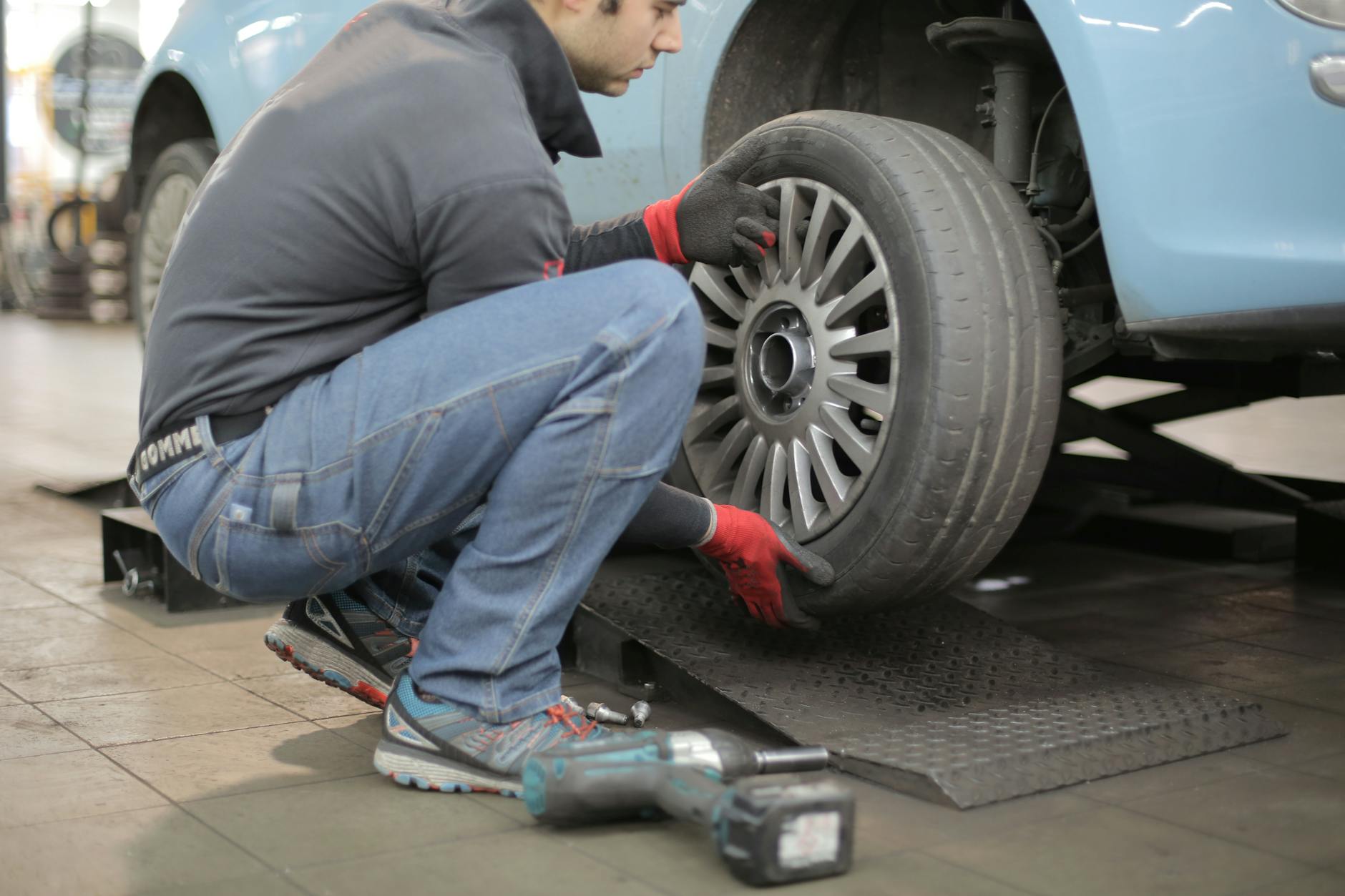
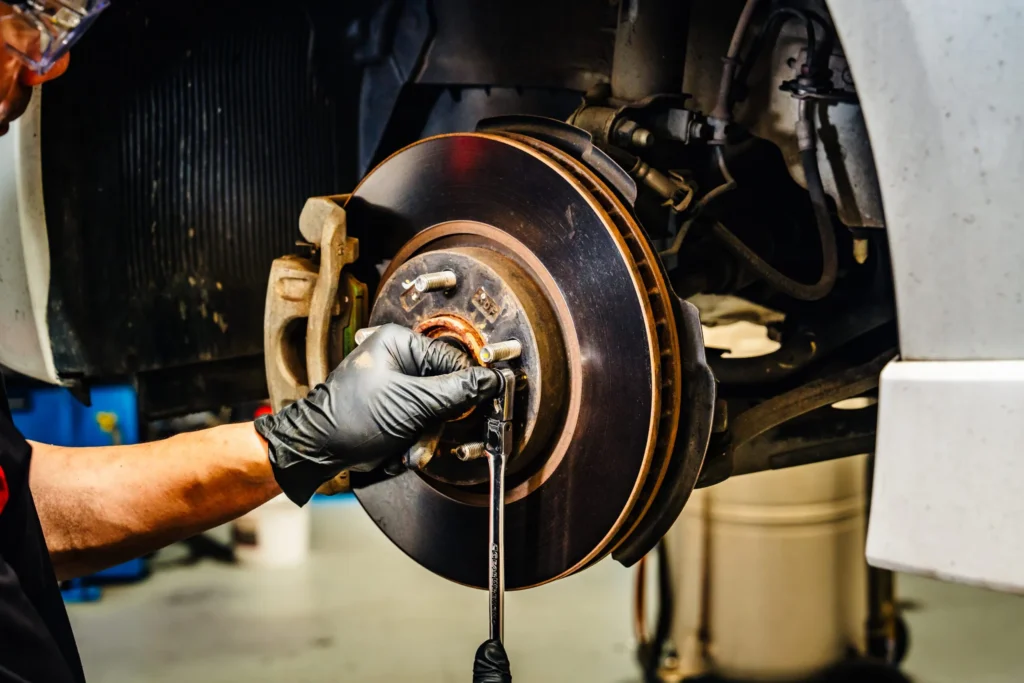
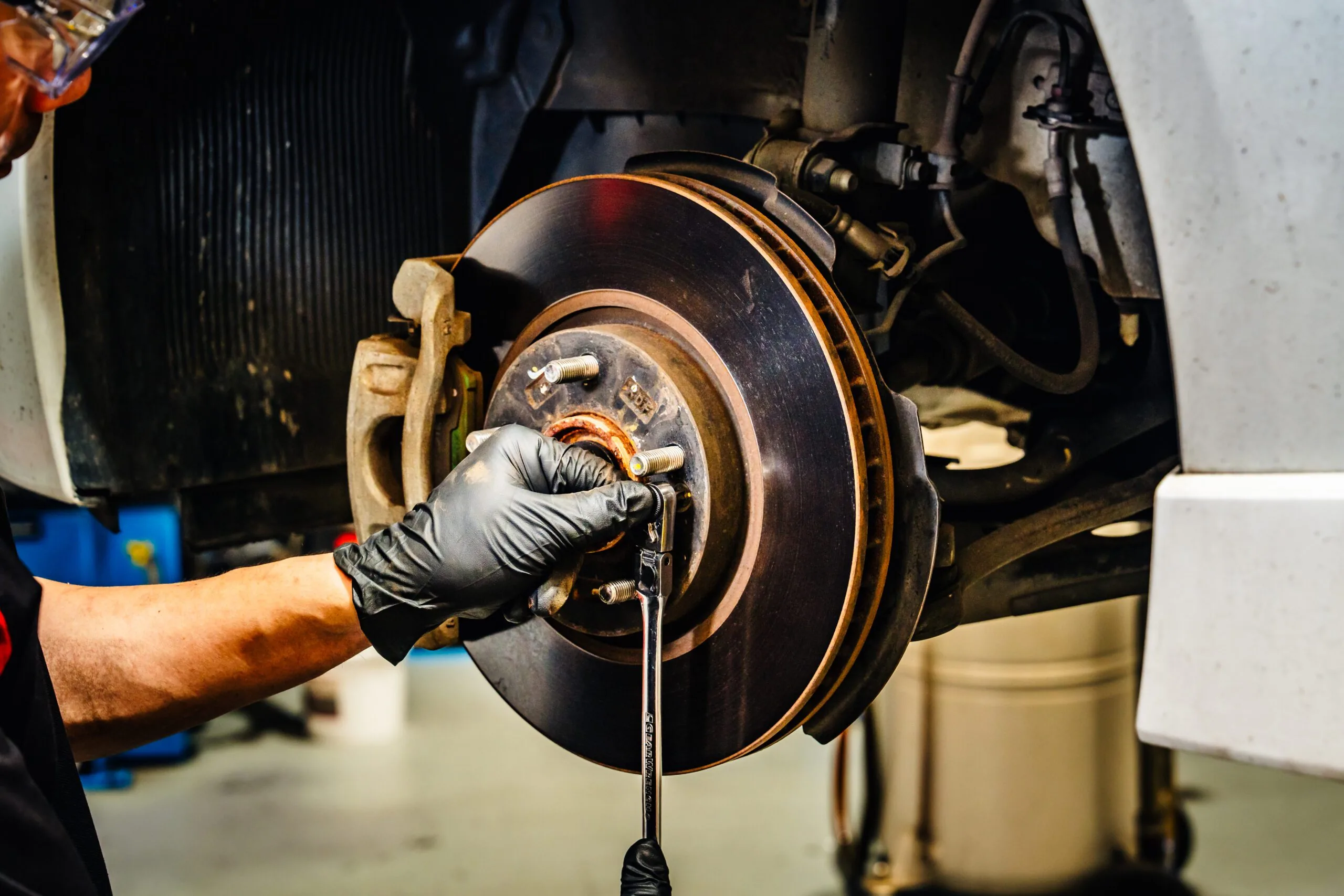
Braking systems rely on a complex interaction of hydraulic pressure and friction. When you press the pedal, you force hydraulic fluid through lines to the brake calipers. These calipers act like clamps. They squeeze brake pads against a spinning metal disc called a rotor. This contact creates the friction necessary to slow your vehicle. However, friction generates massive amounts of heat. In heavy Sydney traffic, your brakes may reach temperatures exceeding 300 degrees Celsius. This constant thermal cycling eventually changes the molecular structure of your brake pads and rotors.
Consider the daily commute from the Western Suburbs into the city. Drivers often spend 90 minutes in “crawling” traffic. You are constantly applying and releasing the brakes. This prevents the rotors from cooling down properly. When metal stays hot for too long, it can “glaze.” Glazing occurs when the brake pad material overheats and smears across the rotor surface. This creates a smooth, glass-like finish that lacks the necessary grip. You’ll feel this as a “hard” brake pedal that requires more force to stop the car.
Our team often finds that vehicles driven primarily in suburbs like Bankstown or Liverpool show different wear patterns than those on the open road. Urban driving leads to faster pad depletion. Every time you stop at one of Sydney’s thousands of traffic lights, you sacrifice a tiny layer of friction material. Eventually, the pads become too thin to dissipate heat. This heat then transfers to the brake fluid. If the fluid boils, you experience “brake fade.” This is a terrifying sensation where the pedal goes to the floor, but the car doesn’t slow down.
Environmental factors also play a role. Sydney’s humid coastal air can lead to surface rust on rotors if a car sits idle. While a few stops usually clear light rust, deep pitting requires professional machining. Furthermore, dust and road grime from construction zones in expanding areas like Blacktown can contaminate the braking surface. This grit acts like sandpaper, scoring the rotors and shortening their lifespan.
We recommend integrating your brake checks with other maintenance tasks. For example, checking your brakes during a