
Wheel Balancing in Sydney? Expert Tips 2026
Table of Contents
Wheel Balancing in Sydney? Expert Tips 2026
Table of Contents
Introduction
Most drivers believe a vibrating steering wheel is just a minor annoyance of old age for a car. Here is the reality: a tiny weight imbalance of just 10 grams can transform into the force of a sledgehammer at highway speeds. When you drive down the M4 at 100 km/h, your tyres rotate roughly 800 times per minute. If that wheel is even slightly off-centre, centrifugal force creates a massive vertical jump. This doesn’t just shake your hands. It tears apart your suspension, creates bald spots on your rubber, and significantly increases your braking distance.
We see this every day at Hot Tyres. Drivers come in thinking they need a thousand dollars of suspension work. In many cases, they just need a precision wheel balance. This guide will explain why Sydney roads are particularly harsh on your wheel weights. We will break down the physics of a balanced spin. You will learn the legal requirements for tyre safety in NSW. By the end, you will understand how a simple 30-minute service saves you thousands in the long run. Let’s look at why your car’s stability depends on more than just a good engine.
Table of Contents
- The Physics of Weight Distribution
- Financial and Safety Impacts of Imbalance
- When and Where to Get Your Wheels Balanced
- The Step-by-Step Balancing Process
- Frequently Asked Questions
- Get Your Free Quote Today
When looking for wheel balancing sydney, quality matters.
The Physics of Weight Distribution
Every tyre and rim has manufacturing imperfections. Even the most expensive high-performance tyres aren’t perfectly symmetrical in weight. One section of the rubber might be slightly denser. The valve stem adds a few grams to one side of the rim. When these components join, they create a “heavy spot.” At low speeds, you won’t feel it. Once you hit 80 km/h, the centrifugal force pulls that heavy spot outward with incredible power. This causes the wheel to hop or wobble.
Static vs Dynamic Balancing
We use two primary methods to fix this. Static balancing addresses the vertical movement. Think of a bicycle wheel on a stand. If one side is heavier, it will always rotate until the heavy side faces the ground. We add a single weight to the opposite side of the rim to level it out. This works for minor issues or very narrow tyres. However, modern cars in the Sydney metro area usually have wide, low-profile tyres. These require dynamic balancing.
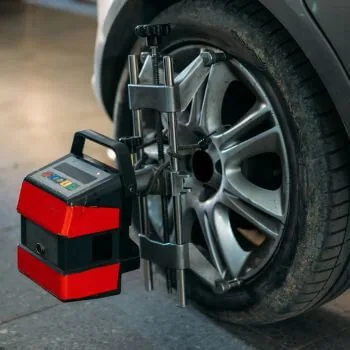
Dynamic balancing deals with side-to-side wobbles. This happens when weight is unevenly distributed across the width of the tyre. If the inner lip of the rim is heavier than the outer lip, the wheel will try to “shimmy” as it turns. Our technicians at Hot Tyres use computerised sensors to measure these forces. The machine spins the wheel and identifies exactly where the “wobble” originates. We then place weights on both the inner and outer flanges of the wheel. This ensures the spin is perfectly true in every plane of motion. You can learn more about how we handle these technical aspects on our