
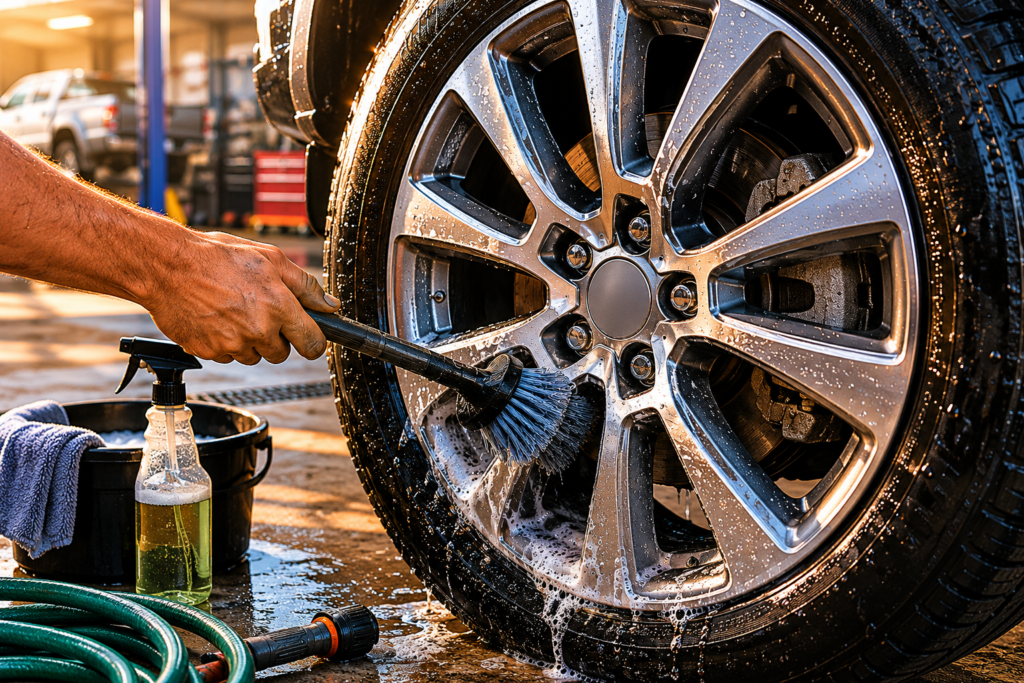
How to clean alloy wheels properly comes down to two things: a 20-minute fortnightly routine and the right product choices. Get those right and the wheels stay looking factory-fresh for years. Get them wrong and brake dust, road grit, salt from coastal driving, and the chemical residue from cheap servo cleaners all damage the finish faster than most owners realise.
This guide covers what to use, what to avoid, the actual cleaning process step-by-step, and the situations where the right move is to let a workshop handle it rather than risk damaging the finish trying to fix something at home.
Why alloy wheels need a different approach to steel wheels
Steel wheels are tough. You can hit them with degreaser, blast them with a pressure washer, scrub with a steel brush, and they will be fine. Alloy wheels are not steel. The bare aluminium underneath is reactive, the clear-coat lacquer on top is the layer that does most of the visible work, and once that lacquer pits, peels, or yellows, the only fix is professional refinishing.
The damage that ruins alloy wheels mostly comes from three sources:
Brake dust left on the wheel. Brake pads release iron particles every time you brake. These embed in the clear-coat surface and oxidise (rust) as they sit there. Left for weeks, they corrode through the lacquer and into the aluminium underneath. The brown-orange staining you see on neglected alloys is iron oxide locked into the finish.
Wheel cleaners that are too aggressive. Cheap acid-based wheel cleaners strip brake dust fast but also strip the protective clear-coat. After 4 to 6 acid cleans, the lacquer is thin enough that brake dust embeds straight into the aluminium. The wheels then look “dull” and no amount of cleaning brings the shine back without professional refinishing.
Pressure-washer damage. A pressure washer held too close, or pointed at the wheel weight or balance weight, will lift the lacquer edges and let water in. The lacquer then peels in patches over the next few months. Workshop pressure washers used by trained operators are safe; consumer pressure washers used aggressively are a common cause of premature lacquer failure.
What you actually need to clean alloy wheels well
You don’t need much, but the gear you do need matters. The full kit costs around $60 to $80 and lasts years.
A pH-neutral wheel cleaner. Look for the “pH balanced” or “acid-free” labelling on the bottle. Brands like Bowden’s Own Wheely Clean, Meguiar’s Hot Rims, and Adam’s Wheel & Tyre Cleaner all work well. Avoid anything with hydrofluoric acid or sodium hydroxide (caustic soda) in the ingredients. The pH-neutral cleaners take 30 seconds longer to dissolve brake dust but won’t damage the clear-coat.
A dedicated wheel brush set. Two brushes minimum: a soft long-handled wheel face brush (synthetic bristles, not metal), and a smaller barrel brush that reaches into the inner spokes and behind the wheel face. EZ Detail Brush makes the standard. Cost: $30 to $50 for a quality set.
A standalone wash bucket. Cleaning wheels with the same bucket you wash the body panels is how grit ends up scratching the paint on your next wash. Get a separate bucket and use it for wheels only.
Microfibre drying towels. Two minimum. Cheap microfibres shed lint into the wheel detail; quality microfibre towels in the 350+ gsm range last for years.
Optional but worth it: an iron-fallout remover. Sprays like Bilt Hamber Korrosol or CarPro Iron X chemically dissolve embedded iron particles that the wheel cleaner won’t fully reach. You’ll see the spray turn purple as it reacts with iron. One bottle lasts 6 to 12 months for a single car. Cost: $40 to $60.
The step-by-step cleaning process
This routine takes 20 to 25 minutes for all four wheels and prevents 90 percent of the long-term damage we see in the workshop.
Step 1: cool down and rinse
Park the car in shade or out of direct sun for at least 30 minutes before starting. Hot wheels make every cleaning product evaporate before it can work, and they cause water spots that bake into the surface. Rinse each wheel with a hose to remove loose dust and grit. This pre-rinse alone removes about 30 percent of what would otherwise scratch the surface when you start scrubbing.
Step 2: apply wheel cleaner generously
Spray pH-neutral wheel cleaner across the entire wheel face, the inner barrel (as far as you can reach), and the tyre sidewall. Let it sit for 2 to 3 minutes. Most cleaners change colour as they react with brake dust, which is your visual cue that the chemistry is working. Don’t let it dry on the wheel; if you see the spray drying out, lightly mist with the hose to keep it active.
Step 3: agitate with the wheel brush
Start with the face of the wheel using the long-handle face brush. Work in straight lines, not circles (circles scratch in patterns that catch light and look worse than straight scratches). Use the smaller barrel brush to reach into the spokes and behind the wheel face. Be thorough at the wheel-weight area and the centre cap; brake dust collects most heavily there.
Step 4: rinse from top down
Hose the wheel from top to bottom, holding the hose 30 to 50cm away from the wheel surface. Avoid using high-pressure attachments on the alloy face. Make sure no cleaner residue is left in the spoke recesses; residue dries to a chalky white that’s harder to remove than the original dirt.
Step 5: dry immediately
Use a microfibre towel to dry each wheel right after rinsing. Water left to air-dry leaves mineral spots from Sydney’s hard water (especially in St George and inner-west areas). Dry the wheel face first, then use a smaller microfibre to reach the inner spoke surfaces.
Step 6: optional sealant or wax
For wheels that have been recently cleaned to bare clear-coat, a dedicated wheel sealant (Sonax Wheel Protectant, Meguiar’s Hot Shine Sealant) adds a sacrificial layer that makes the next clean easier. Apply with a foam applicator, wait 10 minutes, buff off with a clean microfibre. Reapply every 2 to 3 months. This is the single best thing you can do to extend the life of the wheel finish.
What to avoid
Most alloy wheel damage we see in the workshop comes from these specific mistakes.
Acid-based wheel cleaners. Cheap “instant brake dust remover” sprays at servos and discount stores are almost always acid-based. They work fast on visible brake dust but strip clear-coat invisibly. After 6 to 12 months of regular use, the wheel finish degrades faster than the brake dust returns.
Wire brushes or steel wool. Both leave scratch patterns in the clear-coat that catch light and look worse than the brake dust you were trying to remove. Always use synthetic-bristle brushes.
Pressure washing too close. Keep the wand at least 30cm from the wheel surface. Never aim directly at the wheel weight, balance weight, or any chip in the clear-coat where water can get under.
Cleaning hot wheels. Beyond the chemical evaporation problem, hot wheels expand the clear-coat slightly. Cold water on hot lacquer causes micro-cracking that becomes visible peeling over months.
Skipping the dry step. Letting alloys air-dry in Sydney water locks mineral deposits into the finish. These deposits are harder to remove than the original dirt and accumulate over time.
How often to clean alloy wheels
The right frequency depends on driving conditions and brake type. Most Sydney drivers should aim for a full alloy wheel clean every 2 weeks. Cars with aggressive brake pads (most performance and EV setups generate heavy brake dust) need weekly cleaning.
A quick rinse between full cleans helps a lot. A 30-second hose-down per wheel after washing the body panels removes the surface dust before it has time to embed.
Coastal-area driving (East Coast suburbs, Cronulla, northern beaches) adds salt exposure that accelerates corrosion. Weekly cleaning is reasonable for vehicles regularly parked near the beach.
When to bring it to the workshop
Some situations are beyond home cleaning, and continuing to clean them at home will only make things worse.
Kerb rash or scratches that show silver underneath. Once the clear-coat is broken and bare aluminium is exposed, the area will corrode and pit if left untreated. This needs professional alloy wheel repair work to seal the surface again.
Brown-orange staining that doesn’t lift with normal cleaning. This is iron embedded into the aluminium itself, not just on the clear-coat. An iron-fallout remover may help but if it doesn’t, the wheel needs professional refinishing.
Peeling or flaking clear-coat. Once the lacquer is lifting, no amount of cleaning will restore the finish. The wheel needs full alloy rim refurbishment.
Cracked or bent wheels. Visible cracks or noticeable wobble at speed need immediate professional attention. We cover this in the cracked wheel repair page.
Wheels that have been acid-cleaned for too long. If the finish looks “dull” no matter how much you clean, the clear-coat is gone. Refinishing is the only fix.
Frequently asked questions
Can I use dish soap or laundry detergent on alloy wheels?
Dish soap is safe but ineffective on brake dust. It won’t break down the iron particles that cause the worst staining. Laundry detergent is too alkaline and over time strips the wax or sealant layer. Stick with a dedicated pH-neutral wheel cleaner.
How long does a wheel sealant last in Sydney conditions?
Quality wheel sealants last 8 to 12 weeks in normal Sydney conditions, less in heavy summer heat or coastal salt exposure. Reapplying every 2 to 3 months keeps the protective layer fresh and makes each subsequent clean noticeably easier.
Do gloss black wheels need different cleaning?
Slightly more attention. Gloss black shows water spots, swirl marks, and brake dust more visibly than silver or grey finishes. Use the same products but increase cleaning frequency to weekly and always finish with a microfibre dry. Some owners apply a ceramic-grade sealant for longer-lasting black-on-black gloss.
What about machined-face wheels with two-tone finish?
Machined-face alloys (the polished metallic look on the spoke faces) are more fragile than fully painted or powder-coated finishes. Use only pH-neutral cleaners, never any iron-fallout remover (it can stain the machined surface), and dry immediately. The machined face oxidises quickly if cleaning chemistry sits on it.
Can I clean alloy wheels in direct sun?
Not effectively. Sun causes cleaners to dry before they can work, leaves water spots that bake into the surface, and makes the metal too hot for the clear-coat to tolerate cold rinse water. Always clean in shade or wait until early evening.
How do I clean wheels without removing them from the car?
You don’t need to remove them. Modern wheel brushes reach all the spoke faces and inner barrel from the outside. Removing wheels for cleaning is overkill for a regular maintenance clean; reserve it for deep cleaning before refinishing or before applying a long-life ceramic coating.
A simple maintenance routine that works
For most Sydney drivers, the right rhythm is a full clean every 2 weeks following the steps above, a quick hose rinse every time you wash the body panels, and a fresh sealant application every 2 to 3 months. That routine prevents the long-term damage that brings most alloy wheels to our workshop for refinishing.
If you’re seeing damage that’s beyond what home cleaning can fix, drop in to the Riverwood workshop. We can assess whether refurbishment or refinishing is the right move and quote the work before any commitment.