
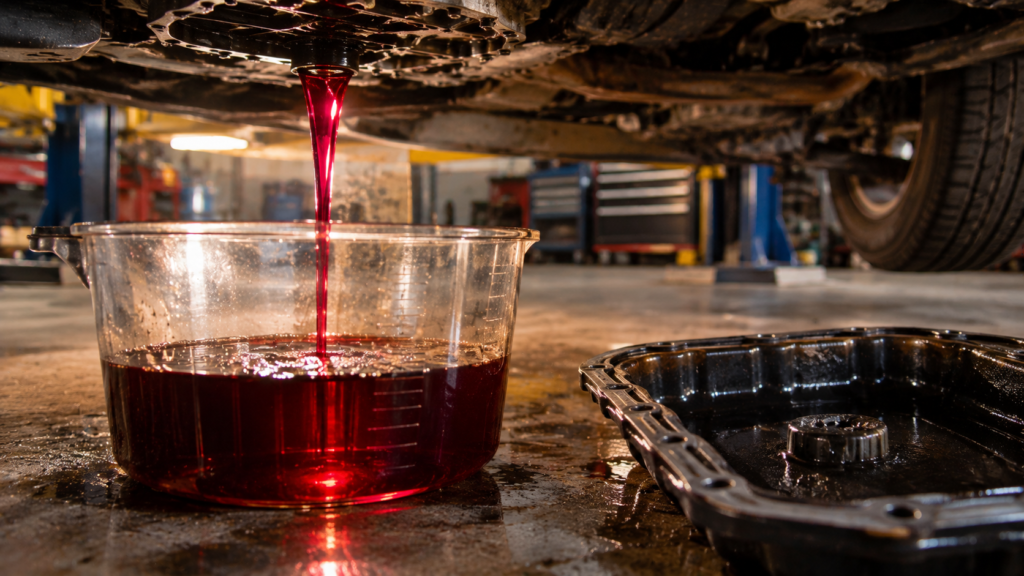
Transmission service cost is a small number that prevents a very large one, which is exactly why it gets skipped. An automatic transmission is the second most expensive component in most cars, it has no obvious service light, and plenty of owners have been told the fluid is sealed for life. Here is what the service involves, what it costs, and why the sealed for life claim deserves scrutiny.
Transmission Service at a Glance
Short answer: a routine automatic transmission service sits at the low end of transmission work, while a rebuild sits at the very top. Call (02) 9533 6138 for a quote on your car.
The transmission service cost you pay depends on three things: the fluid specification your vehicle takes, its capacity, and whether the transmission has a serviceable filter. A conventional automatic, a CVT and a dual clutch box all take different fluid, and the wrong one causes the faults you were trying to prevent.
Put simply, transmission service cost is the cheapest number in this article and the one that keeps you away from the expensive ones.
What Moves the Price of Transmission Work
Basic transmission repairs sit well below extensive work, especially where the transmission needs a complete overhaul or replacement.
That gap is the entire argument for servicing. A routine fluid and filter service sits at the bottom end. A rebuild sits at the top, and frequently the rebuild is the consequence of never doing the service.
| Work | Typical band | What it is |
|---|---|---|
| Fluid and filter service | Lower end | Drain, new filter or strainer, correct specification fluid, pan gasket |
| Fluid flush or exchange | Lower to middle | Exchanging the full volume rather than what drains out of the pan |
| Solenoid, sensor or valve body repair | Middle | Component level repair once a fault has appeared |
| Overhaul or replacement | Highest | Complete rebuild or a replacement unit |
Ring (02) 9533 6138 with your make, model, year and kilometres, and whether you tow. Transmission service pricing depends heavily on fluid specification and capacity, which vary a great deal between vehicles.
Signs Your Transmission Needs Attention
AutoGuru lists these warning signs.
- Engine light on the dashboard.
- The vehicle struggles to accelerate, or the engine revs without the car speeding up.
- Shuddering through the vehicle when driving.
- Whirring, grinding or clunking noises.
- No drive at all, or an inability to select gears.
- Leaking fluid.
Two of those deserve emphasis. Shuddering, particularly at light throttle around 60 to 80km/h, is often a torque converter lock-up clutch shuddering on tired fluid. Caught at that stage it is frequently a fluid problem. Left alone it becomes a converter problem.
And leaking fluid is worth acting on immediately. Automatic transmission fluid is usually red or brown and leaves a distinct patch. A transmission that runs low on fluid overheats, and heat is what destroys them.
About “Sealed for Life”
A lot of modern automatics are sold as filled for life with no service interval. It is worth understanding what that phrase actually means.
It means the fluid is expected to last the design life the manufacturer had in mind, which is not the same as the life you intend to get out of the car. It also assumes conditions the manufacturer had in mind, and Sydney stop-start traffic in summer, with a tow bar on the back, is not those conditions.
Transmission fluid does two jobs at once. It is a hydraulic fluid that operates the clutches, and it is a coolant and lubricant. Heat degrades it, and once it degrades the friction properties change, which is when shuddering and harsh shifts appear.
The practical position: check what your manufacturer specifies, and if the car does hard work, treat the interval as a maximum rather than a target. On a transmission where a rebuild is the most expensive job in the whole system, a fluid service is inexpensive insurance.
What a Proper Transmission Service Includes
- The correct fluid specification. This is not negotiable and it is not universal. Modern automatics, CVTs and dual clutch boxes all take different fluids, and the wrong one can cause the exact symptoms you were trying to prevent.
- Filter or strainer replacement where the transmission has a serviceable one.
- Pan gasket or seal.
- Inspection of what comes out. Metal glitter or clutch material in the pan tells you a great deal about what is happening inside.
- Correct fill level checked at the right temperature. Many modern automatics have no dipstick and must be filled to a specified fluid temperature. Guessing this is how transmissions get damaged during a service.
- Adaptation reset where the vehicle requires it, so the transmission relearns its shift points.
That temperature point is the one to ask about. If a workshop cannot tell you how they set the level on a dipstickless transmission, that is worth knowing before they start.
CVTs and Dual Clutch Boxes Are Different
Not every automatic is a conventional torque converter automatic, and the differences matter for servicing.
- CVT. Uses a belt or chain running between pulleys. Extremely sensitive to fluid condition and specification. CVT fluid is not interchangeable with conventional automatic fluid.
- Dual clutch (DSG and similar). Effectively an automated manual with two clutches. Wet clutch versions have a defined fluid and filter interval that is genuinely important. Shuddering at low speed is a common early symptom.
- Conventional automatic. The most forgiving of the three, and still not indifferent to old fluid.
If you are not sure which you have, that is the first thing to establish, because it changes both the interval and the fluid.
If You Tow
Towing is the single hardest thing you can ask an automatic transmission to do. The load raises fluid temperature, and heat is what kills them.
- Service more often than the standard interval, not less.
- Use tow or haul mode where the car has one. It changes shift points to reduce hunting and lock-up cycling.
- Avoid overdrive on long climbs. Letting the transmission hunt between gears generates heat.
- Consider a transmission cooler if you tow regularly and the vehicle is not already fitted with one.
- After a long tow, let the car idle for a minute before shutting down so fluid keeps circulating.
A transmission that has towed for years on original fluid is on borrowed time, and the repair sits at the expensive end of AutoGuru’s range.
Transmission Servicing at Hot Tyres Riverwood
We service automatic transmissions at 74 Belmore Rd North, Riverwood, as part of our transmission and drivetrain repairs, which also covers clutch replacement, gearbox repairs, CV joints and differentials.
When you ring, tell us the make, model, year, kilometres and whether you tow. We will confirm what fluid the vehicle takes, whether the transmission has a serviceable filter, and what the service comes to on your car.
If the car is already shuddering or shifting harshly, say so. That changes the conversation from a service to a diagnosis, and it is better to know which one you are dealing with before booking. If the shudder is on a manual rather than an automatic, our clutch replacement cost guide is the one to read.
Open Monday to Friday 8:00am to 5:00pm, Saturday 8:00am to 3:00pm. Phone (02) 9533 6138.
Drain and Fill or Full Flush?
There are two ways to change transmission fluid and they are not the same service. The difference explains most of the price variation you will be quoted.
| Drain and fill | Flush or fluid exchange | |
|---|---|---|
| What comes out | Only what drains from the pan, often less than half the total volume | Close to the full volume, including what sits in the torque converter and cooler lines |
| Filter | Usually replaced at the same time | Depends on the workshop and the transmission |
| Cost | Lower | Higher |
| Best for | Regular servicing on a transmission that has been maintained | Fluid that is dark or has never been changed, where a partial change leaves most of the old fluid behind |
| Watch out for | On very neglected fluid, a partial change may not shift the symptoms | On a transmission that is already slipping, a flush will not repair mechanical wear |
The old warning that flushing a neglected transmission will kill it is worth addressing honestly. A flush does not create wear. What it can do is remove worn friction material that was marginally helping a tired transmission function, so a unit already near failure can show symptoms afterwards. That is a transmission at the end of its life either way, and the flush revealed it rather than caused it.
The practical position: service on schedule and this is never a question. If your fluid has never been changed at high kilometres, have the condition assessed and discussed rather than defaulting to either option.
What the Fluid Tells You
Transmission fluid is one of the most informative things on a car, and reading it costs nothing.
- Bright red and translucent. Healthy. This is what new fluid looks like.
- Darker red or light brown. Normal ageing. Due for a service rather than alarming.
- Dark brown and opaque. Overdue. The fluid has been heat cycled well past its useful life.
- Black, or smells burnt. The transmission has been overheating and friction material has broken down. Get it assessed rather than just serviced.
- Pink, milky or foamy. Coolant has entered the fluid, usually through a failed cooler in the radiator. This is urgent, because coolant destroys transmission clutches quickly.
- Glitter or metal flakes on the pan magnet. Some fine paste is normal. Visible metal is not.
That milky pink one is worth knowing about. On many cars the transmission cooler sits inside the radiator, so a failure there mixes coolant and transmission fluid. It presents as an overheating problem and a transmission problem at the same time, and the transmission is usually the more expensive casualty.
If you do not have a dipstick, you cannot check this yourself, which is another reason to have the fluid inspected during a service rather than assuming a sealed transmission needs no attention.
Frequently Asked Questions
Is a transmission service expensive?
No. A routine fluid and filter service sits at the low end of transmission work, and it is what keeps you out of the top end: extensive repairs and rebuilds. Call (02) 9533 6138 for a quote on your car.
How often should an automatic transmission be serviced?
Follow your manufacturer specification, and treat it as a maximum rather than a target if the car does heavy traffic, towing or hot conditions. Heat is what degrades the fluid.
Is transmission fluid really sealed for life?
Filled for life means the design life the manufacturer assumed, under the conditions they assumed. Sydney traffic and towing are harder than that, and a fluid service is inexpensive compared with a rebuild.
What are the symptoms of transmission problems?
An engine light, the car struggling to accelerate or revving without gaining speed, shuddering while driving, whirring or clunking noises, no drive or an inability to select gears, and leaking fluid.
What causes a shudder at light throttle?
Often the torque converter lock-up clutch shuddering on degraded fluid, commonly noticed around 60 to 80km/h. Caught early it is frequently a fluid issue rather than a mechanical one.
Can I use any automatic transmission fluid?
No. Conventional automatics, CVTs and dual clutch transmissions all take different specifications, and the wrong fluid can cause the exact faults you were trying to avoid.
Does towing change how often I should service the transmission?
Yes. Towing raises fluid temperature significantly and heat is what degrades it. Service more frequently, use tow mode if fitted, and consider a transmission cooler if you tow regularly.
Should I get a transmission flush or a drain and fill?
A drain and fill suits a transmission serviced regularly. A full exchange makes more sense where the fluid is dark or has never been changed, because a partial change leaves most of the old fluid in the converter and cooler lines.
Can a transmission flush damage my transmission?
A flush does not create wear. On a transmission already near failure it can reveal symptoms that worn friction material was masking. On a maintained transmission it is a routine service.
What colour should transmission fluid be?
Bright red and translucent when new, darkening to brown with age. Black or burnt smelling fluid means overheating, and pink or milky fluid means coolant has entered, which is urgent.
What does metal in the transmission pan mean?
Fine paste on the magnet is normal wear. Visible flakes or glitter suggest internal damage and the transmission should be assessed before it is simply serviced.
My transmission has no dipstick. How do I check the fluid?
You cannot check it yourself on most modern transmissions. The level has to be set at a specified fluid temperature during a service, which is one reason to have the fluid inspected professionally rather than assuming it is fine.