
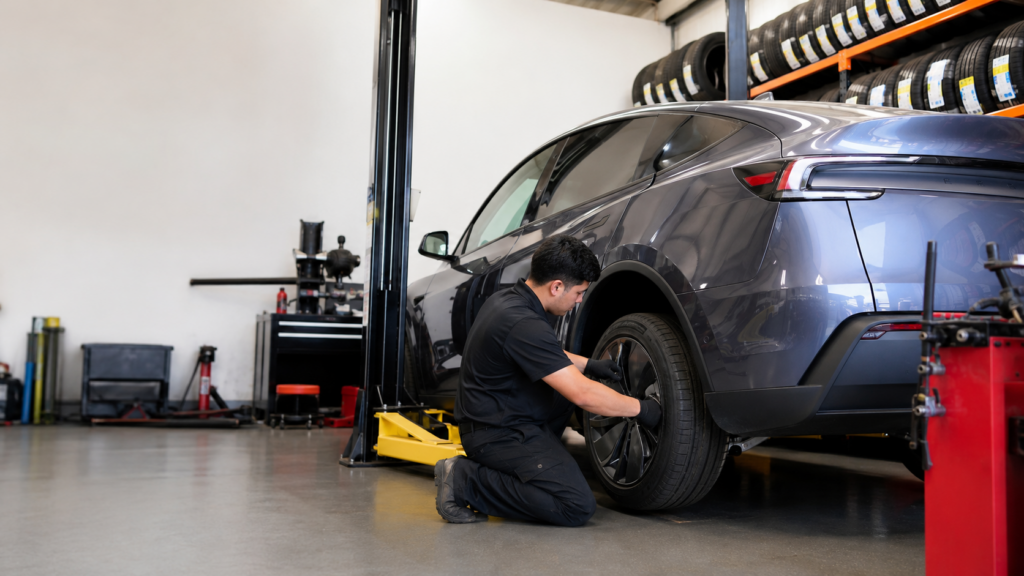
EV tyres Sydney drivers choose need to do more than fit the rim. Electric cars are heavier than many petrol cars, deliver torque instantly, and make tyre noise more obvious because there is no engine noise covering it up.
That does not mean every EV legally needs a tyre with “EV” printed on the sidewall. It means the tyre has to be right for the car: the correct size, load rating, speed rating, pressure, and in many cases an EV-suitable or manufacturer-approved fitment.
Key takeaways
- EVs can wear tyres faster because of extra weight and instant torque.
- Do not choose EV tyres by size alone; check load and speed ratings.
- Tesla, BYD, Polestar, MG and hybrid fitments can have different requirements.
- Wheel alignment and tyre pressure make a major difference to EV tyre life.
- Hot Tyres Riverwood can check the fitment before installing new tyres.
On this page
- Do EVs need special tyres?
- Why EV tyres wear faster
- What to check before fitting EV tyres
- How to make EV tyres last longer
- Where to get EV tyres fitted in Sydney
Last reviewed: July 2026 by Hot Tyres Riverwood for Sydney EV drivers.
If you are looking for EV tyres Sydney drivers can trust, Hot Tyres Riverwood can help you choose the right fitment for your electric car.
If you’ve just switched to an electric car, there’s a good chance you’ll be shopping for tyres sooner than you expected. Sydney EV owners routinely tell us the same thing: “My last set didn’t last.” They’re not imagining it. Electric vehicles are genuinely harder on tyres than the petrol cars most of us grew up driving. And fitting the wrong rubber can cost you range, grip and a surprising amount of money.
Quick Guide to EV Tyres Sydney
Choosing EV tyres Sydney drivers can depend on starts with the right size, load rating, pressure and wheel alignment.
At Hot Tyres in Riverwood, we fit and service tyres for a growing number of Teslas, BYDs, Polestars, MG4s and hybrids every week. This guide explains, in plain English, why EVs need special tyres, how to tell if a tyre is EV-suitable, and how to make a set last as long as possible on Sydney roads.
Do electric cars really need special tyres?
Short answer: you don’t legally need “EV tyres”, but you’ll be much better off with tyres designed for the job. An electric car places three demands on a tyre that a normal petrol car doesn’t:
- Instant torque. EVs deliver full pulling power the moment you touch the accelerator. That force goes straight through the tyre’s contact patch, scrubbing the tread far more aggressively than a petrol engine that builds power gradually.
- Serious weight. The battery pack is heavy. A mid-size electric SUV can weigh 300–500 kg more than the petrol equivalent. That extra mass presses down on the tyres and speeds up wear.
- Silence. Without engine noise to mask it, tyre roar becomes the loudest thing in the cabin. EV-specific tyres use foam liners and special tread patterns to keep things quiet.
Manufacturers respond with purpose-built EV tyres: reinforced sidewalls and casings to carry the weight, harder-wearing tread compounds to survive the torque, low rolling resistance to protect your range, and noise-cancelling foam for comfort. Many carry an “EV” marking or a manufacturer code (Tesla tyres, for example, are often marked T0, T1 or T2).
Why EV Tyres Sydney Drivers See Faster Wear
This is the number-one complaint we hear from electric car owners, so it’s worth being honest about it. EVs often wear tyres faster than comparable petrol cars: especially when the car is driven hard, because instant torque is easy to overuse.
The good news: the wear is manageable once you know what’s driving it. Heavy regenerative braking, aggressive launches, under-inflation and skipped rotations all accelerate it. Fit a proper EV-rated tyre, keep your pressures correct, and rotate on schedule, and you’ll claw a lot of that life back. (More on that below.)
EV Tyres Sydney Checklist
- Choose the correct size from your vehicle placard.
- Match or exceed the required load rating.
- Look for EV, XL, HL or manufacturer-approved fitment where needed.
- Book wheel alignment if the tyres are wearing unevenly.
What to look for in an EV tyre
When you’re choosing tyres for an electric car in Sydney, four things matter most:
- Load rating. EVs are heavy, so the tyre must be rated to carry the load. Often an “XL” (Extra Load) or “HL” (High Load) tyre. Fitting an under-rated tyre is unsafe and can void your insurance. If you’re not sure what your car needs, our guide on understanding tyre load ratings breaks it down.
- Low rolling resistance. This is the single biggest tyre factor affecting your driving range. A low-rolling-resistance tyre can add real kilometres between charges.
- EV or manufacturer marking. Look for “EV”, “Electric Drive”, or a car-maker code (Tesla T0/T1/T2, Audi AO, Mercedes MO, etc.). These tyres are tuned for the exact car.
- Noise rating and comfort. Foam-lined tyres noticeably cut cabin noise, a genuine quality-of-life upgrade in a silent EV.
If you drive a Tesla, be aware that Tesla tyres are a specific fitment. Model 3 and Model Y in particular use large-diameter, low-profile tyres with strict load and speed ratings, not something to guess on. Bring the car in and we’ll match the exact spec.
Can you fit normal tyres to an EV?
You can, and plenty of people do. But there are real trade-offs. A standard tyre that isn’t load-rated for the extra battery weight will wear quickly, run hotter, and may not be safe at highway speed with a full load. You’ll also likely lose range and gain cabin noise. If budget is tight, the smart compromise is a quality all-season tyre with the correct load rating, rather than the cheapest tyre on the shelf. We’ll always tell you honestly what’s a safe fit for your specific car, see our full range of new tyres and fitting options.
How to make your EV tyres last longer
Because EV tyres cost more and wear faster, getting the most from every set really pays off. Here’s what actually works:
- Check your pressures monthly. Under-inflation is the fastest way to destroy an EV tyre, the extra weight punishes a soft tyre hard. Our guide on how to check your tyre pressure walks you through it. Use the pressure on the door-jamb placard, not the number on the tyre.
- Rotate every 5,000–8,000 km. EVs often wear the front or rear pair unevenly depending on whether they’re front-, rear- or all-wheel drive. Regular rotation evens it out.
- Get a wheel alignment. Sydney’s potholes and speed humps knock heavy EVs out of alignment easily, and misalignment shreds tyres in a few thousand kilometres. If the car pulls to one side or the wear looks uneven, book a wheel alignment.
- Ease off the launches. Every “instant torque” getaway leaves a little rubber on the road. Smooth driving is the cheapest range-and-tyre upgrade there is.
- Replace before they’re dangerous. Don’t wait for the legal 1.6 mm minimum, especially in the wet. Our guide on when to replace your tyres covers the warning signs.
Where to Get EV Tyres Sydney Drivers Can Trust

Not every tyre shop is set up for electric cars. Some don’t carry the correct load-rated stock, and heavier EVs need the right hoist and torque specs. At Hot Tyres in Riverwood, we fit EV-suitable tyres for Teslas, hybrids and every major EV brand, source the correct load and manufacturer-rated fitment, and back it with proper balancing and alignment so your new set lasts. We serve drivers right across southern and inner Sydney, from Hurstville and Kingsgrove to the CBD.
Not sure what your electric car needs? Get in touch or drop past and we’ll match the exact tyre to your car: no guesswork, no upsell.
For EV tyres Sydney drivers can rely on, Hot Tyres Riverwood can check your load rating, fitment, tyre pressure and wheel alignment before recommending the right option.
Frequently asked questions
Do electric cars need special tyres?
Not legally, but they benefit greatly from EV-rated tyres. EVs are heavier and deliver instant torque, so purpose-built tyres with reinforced casings, harder tread compounds and low rolling resistance last longer, protect your driving range and run more quietly than standard tyres.
Why do EV tyres wear out faster?
Electric vehicles are heavier than petrol cars and deliver full torque instantly, which scrubs the tread more aggressively. Testing shows EVs wear tyres around 20% faster on average. Correct tyre pressure, regular rotation and wheel alignment significantly reduce that wear.
Are Tesla tyres different from normal tyres?
Yes. Teslas often use tyres with a specific manufacturer code (T0, T1 or T2) plus strict load and speed ratings and, on many models, foam noise-cancelling liners. It’s best to match the exact factory specification rather than fitting a generic tyre.
Can I fit regular tyres to my electric car?
You can, but choose a tyre with the correct load rating (often XL or HL) for the extra battery weight. Standard tyres that aren’t load-rated will wear faster, run hotter and can reduce your range and safety.
How long do EV tyres last?
It varies with driving style and the car, but many EV owners see 30,000–50,000 km from a good set when pressures, rotation and alignment are kept up. Aggressive acceleration and under-inflation can cut that significantly.
Reviewed: July 2026 by Hot Tyres Riverwood for Sydney EV drivers.
Workshop Notes
- Hot Tyres Riverwood fits and checks tyres for Sydney drivers, including electric vehicles, hybrids and family cars.
- NSW Government electric vehicle information: Electric vehicles in NSW.
- For safety-related tyre checks, use the vehicle tyre placard and manufacturer fitment requirements before choosing a replacement tyre.