
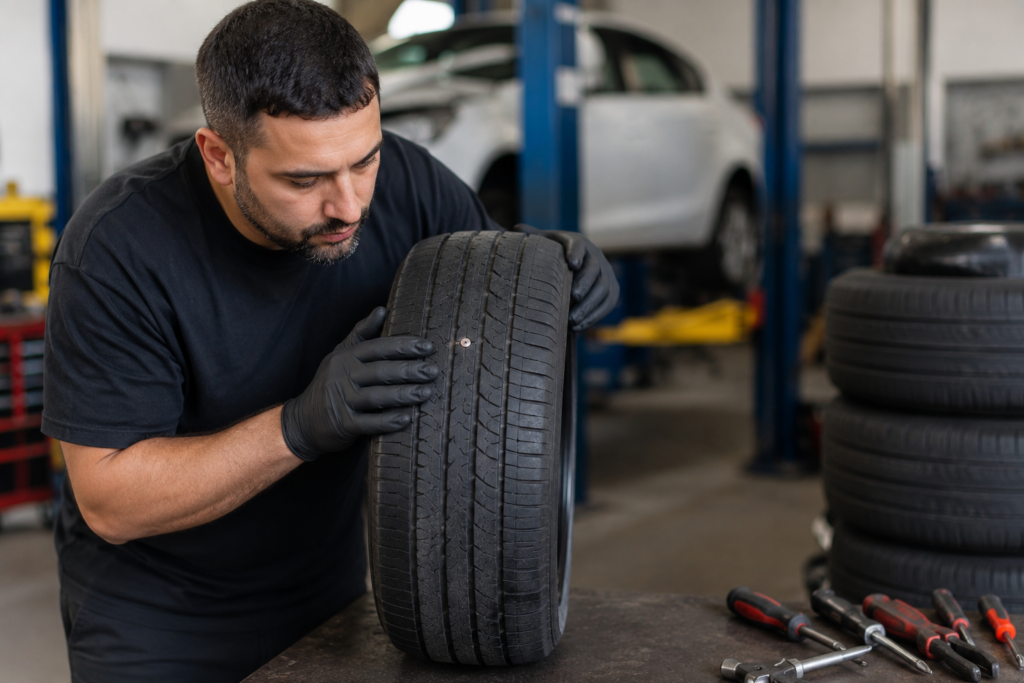
Tyre Puncture Repair vs Replacement in Sydney: When Is It Safe to Repair?
Tyre puncture repair Sydney drivers can trust starts with one simple rule: not every punctured tyre should be repaired, but not every puncture means you need a new tyre.
In many cases, a small puncture in the main tread area can be repaired safely by a tyre technician. But some tyre damage should never be repaired, especially sidewall damage, shoulder damage, large cuts, exposed cords, bulges, or tyres that have been driven flat for too long.
For Sydney drivers, the right decision depends on where the damage is, how large it is, how the tyre was driven after the puncture, and the overall condition of the tyre.
At Hot Tyres Riverwood, we check the tyre properly before recommending repair or replacement. The safest answer is not always the cheapest answer, and the most expensive answer is not always needed either. The aim is simple: keep the car safe, legal and reliable on the road.
Quick Answer
A tyre can often be repaired if the puncture is small, located in the central tread area, and the tyre has not been damaged internally.
A tyre usually needs replacement if the puncture is in the sidewall or shoulder, the hole is too large, the tyre has a bulge, the tread is too worn, the tyre has cracks, or it was driven while flat.
If you are unsure, do not keep driving on it. Have the tyre inspected at a workshop.
Why Tyre Damage Should Not Be Guessed
From the outside, a puncture can look simple. A nail in the tread may seem like a quick repair. But the outside of the tyre does not always show what has happened inside.
If a tyre has lost pressure and the car has been driven on it, the sidewall can overheat and weaken internally. This can leave rubber dust inside the tyre, damage the inner liner, or create sidewall separation. In that case, a basic repair is not safe even if the puncture itself looks small.
That is why proper tyre puncture repair involves removing the tyre from the rim and checking the inside before repairing it.
When a Tyre Can Usually Be Repaired
A tyre may be repairable when all of these conditions are met:
- The puncture is in the main tread area.
- The hole is small.
- The tyre has not been driven flat.
- The sidewall is not damaged.
- The shoulder area is not damaged.
- There is no bulge or exposed cord.
- The tread depth is still safe.
- The tyre is not badly aged or cracked.
- There are no previous unsafe repairs.
The most common repairable punctures are nails or screws through the central tread. These often cause a slow leak rather than instant tyre failure.
A professional repair normally seals the injury from inside the tyre and restores the air seal properly.
When a Tyre Should Be Replaced
A tyre should usually be replaced when the damage affects the tyre’s structure.
The most common replacement situations are sidewall cuts, shoulder punctures, large holes, impact damage, bubbles, exposed cords, severe cracking, uneven wear, or tyres that have been driven flat.
The sidewall is not designed to be repaired like the tread area. It flexes constantly while driving, carries load, and handles pressure changes. A sidewall repair can fail under normal driving conditions, especially at speed or under load.
If there is any doubt about sidewall strength, replacement is the safer option.
Sidewall Damage: Why It Is Different
Sidewall damage is one of the clearest signs that replacement may be needed.
Damage can come from kerbs, potholes, road debris, underinflation, or impact with sharp edges. Sometimes the tyre shows a visible cut. Other times, the sign is a bubble or bulge in the sidewall.
A bulge means the internal structure of the tyre may be damaged. This should be treated seriously because the tyre can fail without much warning.
If you see a sidewall bubble, do not ignore it and do not assume it can be patched.
What If the Tyre Was Driven Flat?
Driving on a flat or nearly flat tyre can destroy it quickly.
Even a short distance can damage the sidewall and inner liner. The tyre may look repairable from the outside, but once removed from the rim, the inside may show signs of heat damage or rubber breakdown.
If you drove on the tyre while it was flat, tell the workshop. That information helps the technician inspect the tyre properly and make the right call.
Tread Depth Matters Too
A puncture repair only makes sense if the tyre still has enough usable life left.
If the tyre is already close to the legal tread limit, badly worn on one edge, or unevenly worn across the tread, replacement may be smarter than repair.
Uneven wear can also point to another issue, such as poor wheel alignment, worn suspension parts, incorrect tyre pressure, or lack of rotation.
If your tyre keeps getting punctures or wearing unevenly, it is worth checking more than just the puncture. You can also read our guide on when to replace your car tyres.
Repair Cost vs Replacement Cost
Tyre puncture repair is usually cheaper than replacing a tyre. But price should not be the only factor.
Repair is good value when the tyre is otherwise healthy and the damage is in a safe repair zone.
Replacement is better value when the tyre is old, worn, cracked, damaged on the sidewall, or no longer safe to use. Repairing an unsafe tyre just delays the real problem and can put the driver at risk.
A good workshop should explain why a tyre can or cannot be repaired.
Can You Use a Tyre Plug From a Kit?
Emergency tyre plugs and sealants may help you get out of trouble, but they are not the same as a proper workshop repair.
A temporary roadside fix does not properly inspect the inside of the tyre. It may also make the tyre harder to repair later, depending on the product used.
If you use a temporary plug or sealant, drive carefully and have the tyre checked as soon as possible.
What About Run-Flat Tyres?
Run-flat tyres need extra care.
Because they are designed to keep the car moving after pressure loss, drivers may not realise how far the tyre has travelled while underinflated. That can make internal damage harder to judge.
Some run-flat tyres may not be repairable depending on manufacturer guidance, damage location, and how they were driven after losing pressure. A workshop should inspect the tyre and confirm the safest option.
What To Do After a Puncture
- Slow down safely.
- Avoid hard braking or sharp steering.
- Pull over somewhere safe.
- Check whether the tyre is visibly flat.
- Do not remove a nail or screw on the roadside unless you are changing the tyre.
- Use the spare only if safe and suitable.
- Book a tyre inspection as soon as possible.
If the tyre is losing air quickly, do not keep driving on it. Driving on a flat tyre can turn a repairable puncture into a replacement.
Why Sydney Roads Make Tyre Damage Common
Sydney drivers deal with potholes, construction debris, kerbs, sharp road edges and stop-start traffic. These conditions can lead to punctures, impact damage, sidewall bubbles and uneven wear.
A small puncture after driving through roadworks may be repairable. A hard pothole hit with a sidewall bulge is a different problem.
If the car also pulls to one side, vibrates, or the steering wheel feels off-centre after impact, it is worth checking wheel alignment and wheel balancing as well.
Hot Tyres Riverwood Can Check It Properly
Hot Tyres Riverwood helps Sydney drivers with tyre puncture checks, tyre replacement, used tyres, new tyres, wheel alignment, balancing and general tyre safety advice.
If the tyre is repairable, we will explain the repair. If it is not safe to repair, we will explain why replacement is the better option.
The goal is not to sell a tyre when a repair is safe. The goal is to avoid repairing a tyre that should not be back on the road.
Final Thoughts
A punctured tyre can sometimes be repaired, but only when the damage is in the right place and the tyre is still structurally safe.
Repair is usually suitable for small punctures in the central tread area. Replacement is usually needed for sidewall damage, shoulder damage, large holes, exposed cords, bulges, badly worn tread, severe cracking, or tyres driven flat.
If you are unsure, have the tyre inspected before driving further.
For tyre puncture repair and tyre replacement advice in Riverwood and Sydney, contact Hot Tyres.
FAQs
Can a punctured tyre always be repaired?
No. A punctured tyre can only be repaired when the damage is in a safe repair area and the tyre structure is still sound. Sidewall and shoulder damage usually require replacement.
Is sidewall tyre damage repairable?
Sidewall damage is generally not considered safe to repair because the sidewall flexes constantly and carries structural load.
Can I drive with a nail in my tyre?
If the tyre is still holding air, drive carefully to a nearby workshop. Do not keep driving long distances because the puncture can worsen or the tyre can lose pressure suddenly.
Is it better to repair or replace a tyre?
Repair is better when the puncture is small, in the tread area and the tyre is otherwise healthy. Replacement is better when the tyre is worn, cracked, sidewall-damaged, bulging, or driven flat.
How do I know if my tyre was damaged inside?
The tyre usually needs to be removed from the rim and inspected internally. Outside appearance alone is not always enough.
Can a tyre be repaired twice?
Sometimes, but it depends on the location of each repair and the tyre’s condition. Multiple repairs close together or repairs near the shoulder may make replacement safer.
Do I need wheel alignment after a puncture?
Not always. But if the puncture happened after a pothole or impact, or the car pulls to one side, wheel alignment should be checked.