
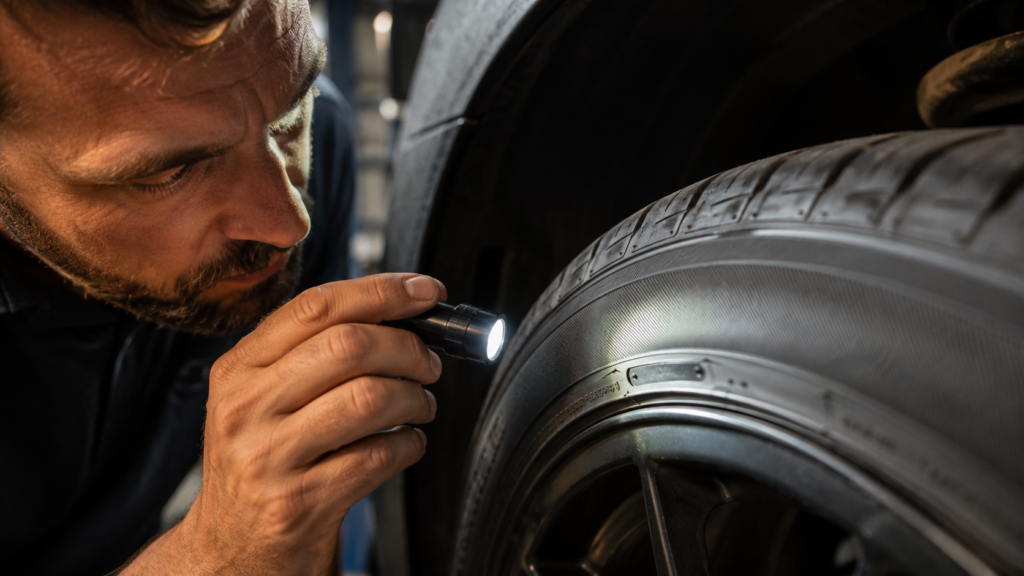
Knowing how to spot fake tyres comes down to a few quick checks before you pay: a price that looks too good to be true, sloppy or misspelt sidewall markings, a missing or very old date code, and a seller with no fixed shopfront. Fake tyres are tyres sold under a counterfeit brand name, or cheap non-compliant tyres passed off as safe.
It sounds like a rare problem until you remember tyres are the one thing keeping your car on the road. A bargain that lets go under brakes or in the wet was never a bargain. So it’s worth a two-minute check, and this guide walks you through exactly what to look at.
Key takeaways
- Fake tyres are counterfeit-brand or non-compliant tyres sold as if they’re safe.
- Red flags: a too-cheap price, poor or misspelt markings, a missing or old date code, a dodgy seller.
- Read the four-digit date code for the week and year of manufacture.
- Look for recognised standards markings such as a DOT or E-mark.
- Selling counterfeit or non-compliant tyres is illegal; buy from a reputable fitter.
On this page
Why fake tyres are dangerous
Counterfeit and non-compliant tyres skip the testing real tyres go through. The rubber compound, the internal steel belts, the way it’s built, any of it can be substandard, and it shows up exactly when you need the tyre most: under hard braking, mid-corner in the rain, on a long hot drive. They can wear unevenly, lose grip early, or come apart with no warning. A fake tyre might look identical to the real thing on the rack and behave completely differently the first time you really need it. You’re not just risking your money, you’re risking a crash.
The red flags
Any one of these on its own is a reason to slow down and look closer.
- A price that’s too good to be true. A well-known premium brand going for a fraction of the normal rate is the classic warning sign.
- Dodgy sidewall markings. Genuine tyres have crisp, correctly spelt branding and size details moulded cleanly into the rubber. Blurry, uneven, shallow or misspelt text is a giveaway.
- No date code, or an old one. Every genuine tyre carries a four-digit date code for the week and year it was made. Missing it, or a code several years old on tyres sold as new, is a warning.
- No recognised standards mark. Tyres sold for road use here have to meet set standards, and genuine ones carry the right markings. Fakes often don’t, or fake them badly.
- A seller with no real address. Cash-only deals, online-only listings with no returns, car-park handovers and no warranty all point to trouble.
- Packaging or labels that don’t match. Stickers over the top of other markings, or labels that don’t line up with what’s moulded into the tyre, suggest the tyre has been relabelled.
How to read the date code
Look for a four-digit number on the sidewall, usually inside an oval, as part of a longer code that starts with the letters DOT. The last four digits are what matter: the first two are the week, the last two are the year. So “2419” means the tyre was made in the 24th week of 2019. On a tyre being sold as new, you want a recent date. A code that’s several years old means it has been sitting in a warehouse, and the rubber has already started ageing even though nobody has driven on it. Old “new” stock is one of the most common dodges, so always check this.
The standards mark to look for
Tyres approved for sale in Australia carry markings that show they meet recognised safety standards, such as a DOT code (the US standard widely used here) or an E-mark from the European system. These aren’t decoration, they’re proof the tyre design passed testing. A genuine tyre wears these clearly and consistently. If the markings are missing, smudged, or look like they’ve been added as an afterthought, treat the tyre with suspicion.
Buying tyres online
Buying online isn’t the problem, but it removes your chance to inspect the tyre before you pay, so the seller matters more than ever. Stick to established retailers with a real business presence, clear returns and warranty terms, and reviews you can actually find. Be wary of marketplace listings and social media sellers offering big-name tyres at prices no real shop could match. When the tyres arrive, check the date codes and markings before they go on the car, and if anything looks off, don’t fit them.
Buying used tyres safely
There’s nothing wrong with quality second-hand tyres, and they can be a smart way to save money, as long as they’re properly inspected first. The risk with private used-tyre sales is that you can’t always see hidden damage, like an internal repair that wasn’t done correctly, or a tyre that was driven flat. That’s why we check tread depth, age, internal condition and any past repairs on every used tyre we sell through our second-hand tyres service. If you’re buying used privately, have the tyre inspected by a fitter before you trust it. For brand-new stock with full traceability, see our new tyres range.
The legal side
Tyres sold for road use in Australia have to meet safety standards, and selling counterfeit or non-compliant tyres isn’t legal. That protection only helps if you buy from someone who actually follows the rules. A genuine fitter has a reputation and a business riding on what they sell, which is the whole reason the back-alley bargain exists in the first place. If a deal feels like it’s avoiding the normal rules, it probably is.
What to do if you think you bought a fake
Once you know how to spot fake tyres, you might realise a set you already bought looks suspect. If so, stop driving on them until they’ve been checked. Bring them to a tyre shop for inspection so you know for certain. Keep your receipt and any listing or messages from the seller, because you may have grounds to seek a refund, and counterfeit goods can be reported to consumer protection authorities. The priority is safety first: don’t keep using a tyre you don’t trust just because you’ve paid for it.
Get it checked
Not sure about a tyre you’ve been offered or already fitted? Bring it to the Hot Tyres workshop in Riverwood and we’ll check the markings, date code and overall condition, then tell you straight whether it’s genuine and safe to fit. It’s a quick look on our tyre services, and a lot cheaper than finding out the hard way.
Frequently asked questions
Are fake tyres illegal in Australia?
Yes. Tyres sold for road use must meet Australian safety standards, and selling counterfeit or non-compliant tyres is against the law. Always buy from a reputable seller who follows those rules.
How can I tell if a tyre is genuine?
Check for crisp, correctly spelt sidewall markings, a recent four-digit date code, and recognised standards markings such as a DOT or E-mark. Be wary of prices far below market and sellers with no fixed address or warranty.
What does the date code on a tyre mean?
It’s a four-digit number on the sidewall showing the week and year of manufacture. For example, “2419” means week 24 of 2019. On new tyres you want a recent date, because rubber ages even unused.
Are cheap tyres always fake?
No. Plenty of budget tyres are perfectly genuine and legal. The warning sign is a known premium brand at an unrealistically low price, combined with poor markings or a questionable seller.
Is it safe to buy used tyres?
Yes, if they’re properly inspected first. Have any used tyre checked for tread depth, age, internal condition and past repairs before trusting it, which is exactly what a reputable tyre shop does before selling one.
Written by the team at Hot Tyres, a tyre fitting and auto repair workshop at 74 Belmore Rd North, Riverwood NSW, serving Sydney drivers for over a decade. Unsure about a tyre? Drop in and we’ll check it’s genuine and safe.