
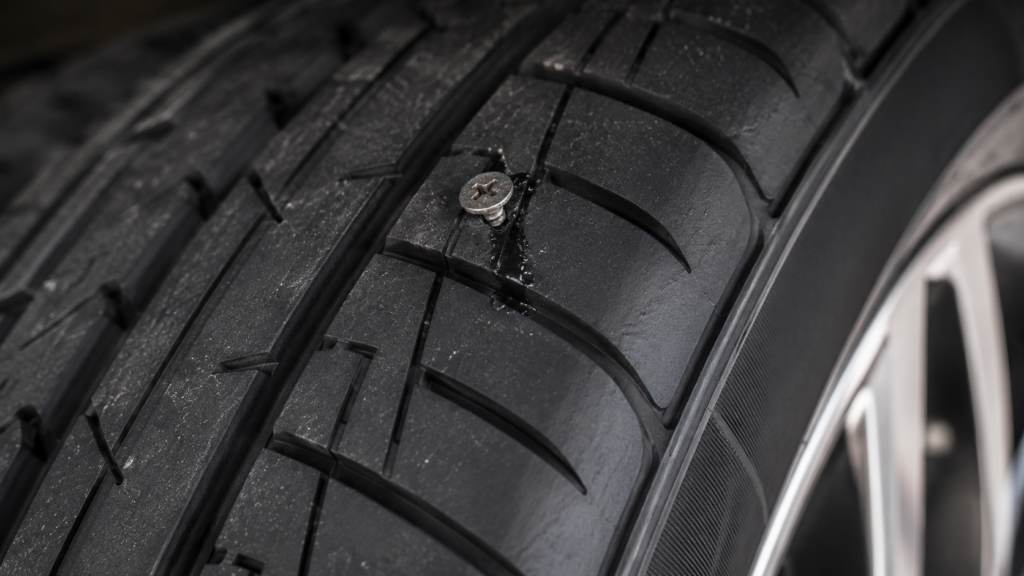
Self-sealing tyres have a layer of sticky sealant lining the inside of the tread. When a nail or screw punctures the tread, the sealant wraps around the object and closes the hole, so the tyre keeps its air and you keep driving. They seal small tread punctures only, not sidewall damage or large gashes.
They’ve quietly turned up as standard fitment on a lot of newer cars, partly because so many of those cars no longer come with a spare. Here’s what’s going on inside one, how they differ from the alternatives, and whether they’re worth choosing.
Key takeaways
- A built-in sealant layer plugs small tread punctures (up to about 5mm) as they happen.
- They seal the tread only, not sidewall damage, large holes or a blowout.
- Different from run-flats, which let you drive a short distance after the tyre goes flat.
- They may or may not be repairable; always have them inspected.
- They cost a little more, and suit cars sold without a spare.
On this page
How self-sealing tyres work
Under the tread sits a soft, tacky sealant coating, applied during manufacture. Drive over a nail and the rubber grips it like any tyre would. If the nail later works its way out, the sealant immediately flows into the hole and plugs it before much air escapes, often without you noticing a thing. Even with the nail still in place, the sealant grips around it and stops a slow leak forming.
The important limit is location. The sealant only covers the tread, the part that contacts the road, and only handles punctures up to roughly 5mm. A puncture or cut in the sidewall is still a flat, and so is a large hole or a blowout. So self-sealing reduces the small, common punctures, the screw or nail you pick up in a car park, rather than making the tyre indestructible.
Self-sealing vs run-flat vs a repair kit
These three solve the puncture problem in different ways, and people mix them up constantly.
- A self-sealing tyre closes the hole as it happens, so you don’t lose pressure in the first place. You often won’t even know you had a puncture.
- A run-flat tyre doesn’t seal anything. It has reinforced sidewalls strong enough to carry the car a limited distance at reduced speed after the air has gone, so you can get to a workshop instead of changing a tyre on the roadside.
- A puncture repair kit, the bottle of sealant and a small compressor that comes in many new cars, is a temporary fix you apply yourself after a puncture, then drive carefully to get the tyre properly repaired.
In short: self-sealing prevents the pressure loss, run-flat lets you keep going after pressure loss, and a repair kit is a manual patch for when it happens. Some cars combine a couple of these.
The upsides
- Small punctures often seal with no pressure loss and no stop on the side of the road.
- They ride and handle like a normal tyre, without the firmer ride run-flats are known for.
- Genuinely handy on cars that ship without a spare, where a flat would otherwise mean a tow or a roadside wait.
- Less chance of driving on a slowly deflating tyre without realising, which protects the tyre from further damage.
The downsides
- They cost more than a standard tyre.
- The sealant only handles small tread punctures, usually up to about 5mm. Sidewall damage, big holes or a blowout are beyond it.
- They weigh a little more, which can nudge fuel use up slightly.
- Not every shop will repair one, and repair rules vary, which brings us to the question everyone asks.
Can self-sealing tyres be repaired?
Sometimes, and it depends on the damage and the manufacturer’s rules. The internal sealant can make a standard plug-and-patch repair messier, because the technician may need to clean sealant away from the repair area, and some makers advise against repairing them at all. The damage also has to fall within the normal repairable zone, in the tread and within size limits, just like any tyre. So don’t assume either way. Bring the tyre in and we’ll check whether it can be safely repaired or needs replacing. See tyre repair and replacement.
Do they affect tyre pressure sensors?
No. Self-sealing tyres work fine with the tyre pressure monitoring system (TPMS) fitted to most modern cars. In fact the two complement each other: the sealant handles the small punctures, and the sensor warns you if a larger one drops the pressure beyond what the sealant can manage. Keep an eye on any TPMS warning light even with self-sealing tyres, because it’s still telling you something needs attention.
Are they worth it?
If your car came with self-sealing tyres and has no spare, staying with them keeps that convenience and matches what the car was designed for. If you’re choosing from scratch and do a lot of suburban or city driving, where a nail or screw is the usual culprit, the peace of mind can earn its keep. If most of your driving is long highway runs far from a workshop, you might value a run-flat or simply carrying a spare instead. For how they stack up against the other options, see our guide to the types of car tyres, or talk to us about fitting a set from our new tyres range.
Frequently asked questions
What are self-sealing tyres?
Tyres with a sealant layer inside the tread that automatically plugs small punctures, so the tyre keeps its air pressure. They seal tread punctures only, not sidewall damage.
What’s the difference between self-sealing and run-flat tyres?
Self-sealing tyres close the puncture so you don’t lose pressure. Run-flat tyres don’t seal anything; their reinforced sidewalls let you drive a limited distance after the tyre has gone flat.
Can a self-sealing tyre be repaired?
Sometimes, depending on the damage and the manufacturer’s guidance. The internal sealant can complicate a standard repair, so have it inspected by a tyre shop rather than assuming.
Do self-sealing tyres need a spare?
They reduce the need for one for small punctures, but they can’t handle sidewall damage or a blowout, so carrying a spare or a repair kit is still wise on longer trips.
Do self-sealing tyres cost more?
Yes, they generally cost more than a standard tyre and weigh slightly more, which can nudge up fuel use a little. Many drivers consider the convenience worth it, especially on cars without a spare.
Written by the team at Hot Tyres, a tyre fitting and auto repair workshop at 74 Belmore Rd North, Riverwood NSW, serving Sydney drivers for over a decade. Got a puncture in a self-sealing tyre? Drop in and we’ll check whether it can be repaired.